

_edited_edited.png)


Carlo Petrini by Cate Devine
- Cate Devine

- May 27
- 5 min read
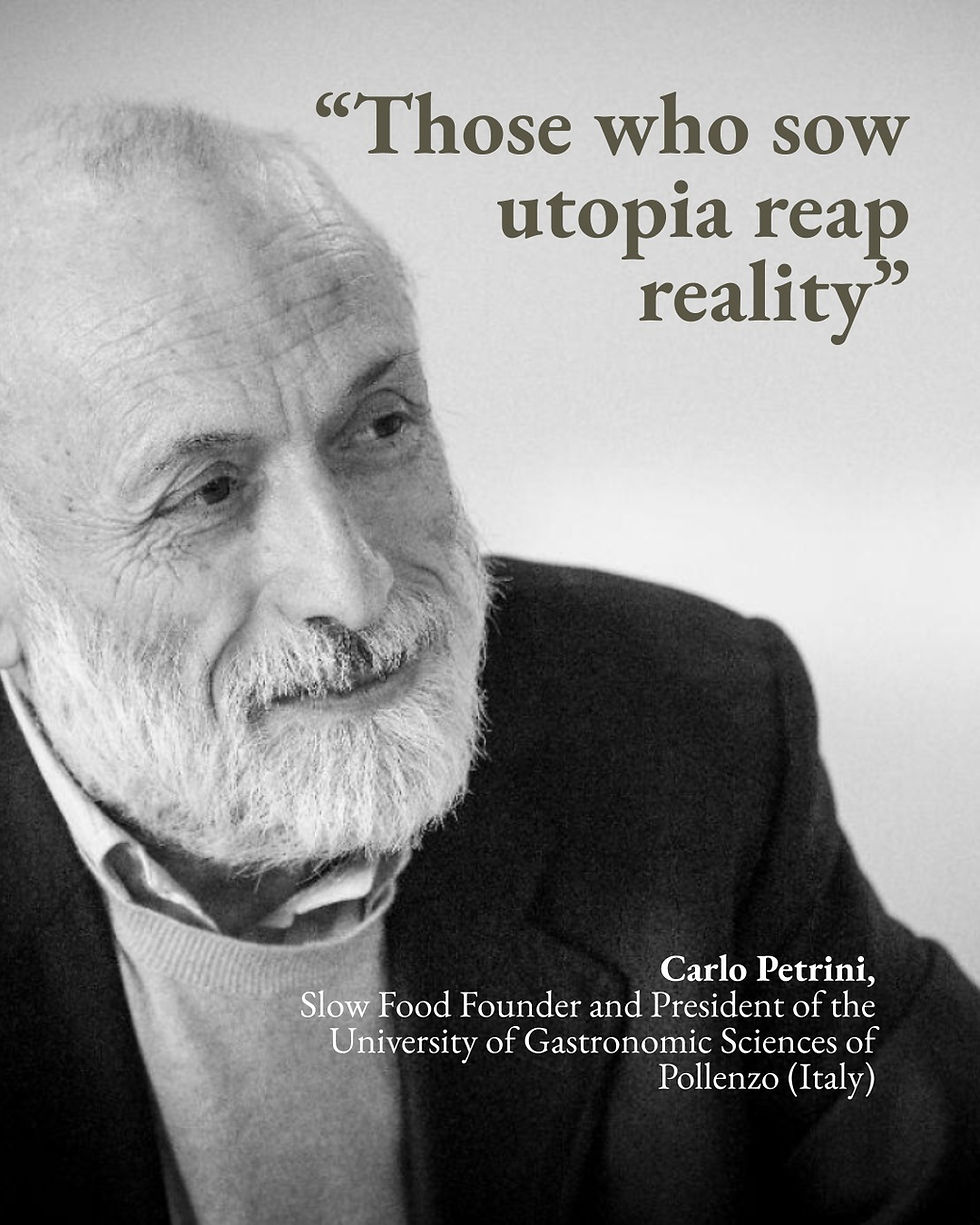
Carlo Petrini’s impact on Scotland runs deeper than many realise. In her thoughtful tribute, Cate Devine traces how the Slow Food founder’s ideas have shaped chefs, growers, policymakers and communities across the country — a quiet revolution whose roots now reach from kitchens and markets to allotments, classrooms and culture itself.
The steady flow of tributes from across the globe to Carlo Petrini, the Italian founder of the global Slow Food movement who died on May 21, was as wholesome and glowing as the best artisanal olive oil the man himself championed.
From New York, Rome, Uganda, Uruguay and beyond, the man who, for 40 years, campaigned against the industrialisation of global food production, was celebrated for changing the way we think about food by promoting sustainable food production and traditional cooking.
Petrini named his 1986 movement ‘Slow Food’ in defiance of the opening of a McDonald’s ‘fast-food’ outlet at the Spanish Steps in Rome as he saw this as an alarm call that would make the world wake up to the “criminality” of the global food culture which he believed was in crisis because it put profits before all else and regarded food merely as a commodity.
Now Slow Food is active in more than 160 countries worldwide. The Italian actress Isabella Rossellini was inspired by Petrini to found mamafarm in New York, posting that he made her “understand the importance of small organic farms and to retain knowledge and traditions”.
But Scotland, too, has been touched by Carlo Petrini and is an active participant in his global movement.
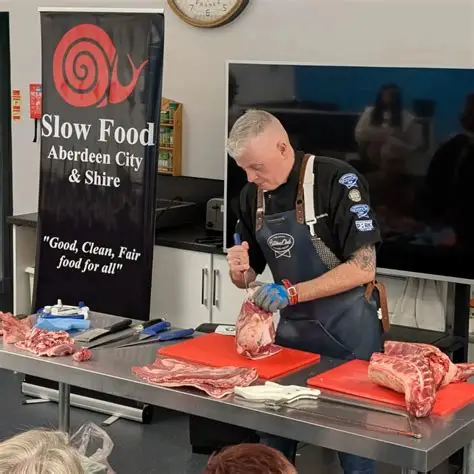
Under the Slow Food Scotland banner there are SF membership groups or convivia - so named because Slow Food encourages the ‘convivial’ group sharing and discussion of good food around the table - in Aberdeen, Edinburgh and Glasgow, with a virtual group that reaches more rural areas. Several members have had the privilege of attending the bi-annual Terra Madre Salone deli Gusto gastronomy events in Turin, also founded by Petrini. These bring together thousands of farmers and producers from hundreds of countries who exchange knowledge and foster a sense of belonging to a global community committed to protecting food and biodiversity. Students of the much-missed MSc Gastronomy course at Edinburgh’s Queen Margaret University learned from him too.


It’s fair to say there has been a food revolution in Scotland in recent times. I’d suggest that much of this has been curated by the launch of Scotland’s pioneering Recipe for Success — Scotland’s National Food & Drink Policy (2009), Its ambition to encompass the impact of food and drink on health, the environment, social justice and education to form a Good Food Nation, was surely emboldened
by Petrini’s mantra of good food for all, which at the time was gaining momentum across the globe. A range of regional food groups is now active across the country.
When I was food writer at The Herald I had a one-to-one interview with Petrini in 2015 when he was at Edinburgh’s Café St Honoré to launch Slow Food Scotland as a newly devolved branch of Slow Food UK (which he described as a “middle-class dining club which could have done more to protect Scotland’s unique food identity and heritage”). He told me:
“Scotland is on the brink of a food revolution and is poised to become a great food nation once again.
“Scotland is not just whisky and salmon; it has a wonderful tradition of artisan cheesemaking, of soups and broths, and there are some amazing breeds of animals here. The rest of the world envies its lush countryside.
"I sense a renewed pride in its specific food heritage and knowledge of food, and see that young farmers and producers are re-engaging in its agricultural past. Your national bard was a farmer, but he didn't work for Nestle. What's starting now in Scotland is beautiful.”
The first Farmers’ Market in Scotland - Perth in 1999 and Ayr soon after - had already marked a growing enthusiasm for the field-to-fork movement and pride in local artisan producers and growers. They now number around 36; the steady growth of independent food shops, delis, fishmongers’ and
butchers’ shops selling local high-welfare sustainably reared artisan produce and products across the country is their natural progression. Growers, too, such as Locavore, Glasgow’s Greenheart Growers and East Neuk Market Garden, run veg box deliveries.
The burgeoning number of younger people on waiting lists for a plot in the country’s network of allotments (32 council-run sites in Glasgow; 32 in Edinburgh; 22 in Aberdeen; three in Stirling; four in Dundee - plus many privately-run plots and community growing spaces) is testimony to a renewed interest in the organic, sustainable, grow-your-own movement that Petrini would surely be proud of. In fact, he described this to me as a “very modern way to live”.
I’m convinced it was the Slow Food movement that inspired and encouraged all of this.
The Slow Food Cooks’ Alliance has 25 or so members in Scotland and includes chefs Fred Berkmiller of l’Escargot Bleu, Carina Contini of the Contini restaurant group, and Neil Forbes of Cafe St Honore, all in Edinburgh; and in Glasgow Giovanna Eusebi of Eusebi Deli and Peter McKenna of Bistro Eleven Fifty Five (formerly The Gannet). These chefs and cooks are dedicated to preserving Scotland’s culinary biodiversity by championing small-scale producers and promoting “good, clean and fair’ ingredients in
their restaurants, cafés and street food outlets.

They are also committed to the Ark of Taste, a “virtual vessel” of rare endangered heritage breeds and seeds and food cultures established by Petrini to encourage their use to keep them from being lost or forgotten. This has had a remarkable impact In Scotland under the stewardship of Wendy Barrie, editor of the Scottish Food Guide. At present there are 50 products or breeds including Isle of Skye sea salt, Anster cheese, salt herring, reestit mutton, the Selkirk bannock, the Musselburgh leek, Shetland cabbage/kale, Traditional Ayrshire Dunlop cheese, Birch Water from Birken Tree, Original Arbroath Smokies, Wild Scottish Juniper, Bere barley, Isle of Barra Snails, the Aberdeen Buttery or Rowie, Hebridean sheep, Cadzow cattle and Native Aberdeen Angus. Wendy says: “Carlo’s legacy lives on throughout Scotland.”
Chef Neil Forbes, who has been to Terra Madre a few times, says: “We all eat differently because of Carlo Petrini.”
Slow Food also encompasses Slow Wine. So let’s raise a glass of Italian indigenous-grape wine from a small-scale producer and say: “Saluti, Carlo, and slàinte!”
Cate Devine is an award winning food journalist and former Food & Drink Editor of The Herald.


